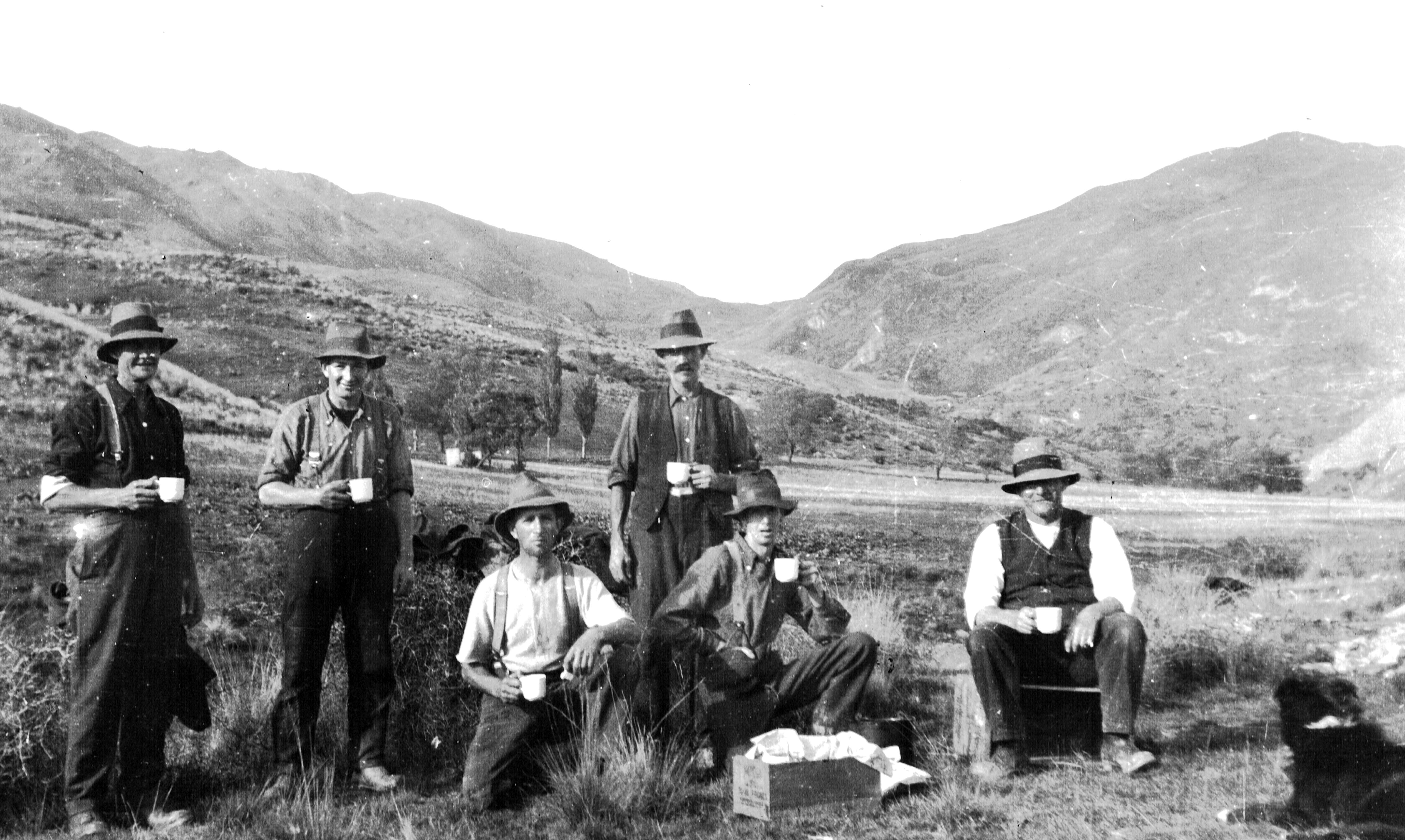
The second economic stage was a mixture of small, uneconomic farms with farmers supplementing their farm income with a mixture of gold mining and the sale of rabbit skins.
Twenty-eight men joined the army during the First World War, having a big impact on the valley’s economy. The effect of the Great War on Cardrona was that the dredges sat idle, neglected through the lack of manpower. After the war, the Government purchased the large Pisa station and divided it into ten pastoral farms, three in the Cardrona Valley.
Servicemen returning from the war settled on them in 1924. In 1930, Wanaka Station was subdivided providing three more farms in the Cardrona Valley. In 1945 these subdivisions and the continual amalgamation of the small properties became sixteen farming units; the smaller were relying on sheep, rabbit skins and meat. The demand from Europe for rabbit meat and skins became the main income earner for the valley.

When the Government prevented the economic use of the rabbit in 1949-50 Rabbit Boards were formed. There were twenty-eight professional rabbiters in the Cardrona Valley. Two companies (Borthwicks and Wards) ran separate trucks up the valley, collecting rabbit carcases. As a schoolboy in the late 1940’s I was receiving, in today’s equivalent purchasing power, $10 a rabbit.
________
First published in “Changing Times in the Cardrona Valley” by John Lee